2026 Honda Civic Type R Review: Still the Best Hot Hatch?
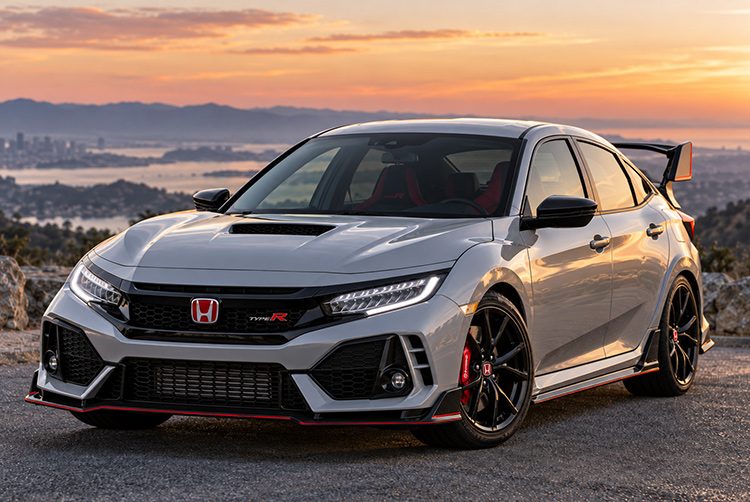
Is the 2026 Honda Civic Type R still the ultimate performance hatchback? Explore its 315-horsepower turbocharged engine, six-speed manual transmission, handling, interior, pricing, and competition to see if Honda's legendary Type R is still worth buying.
The Honda Civic Type R has spent years proving that front-wheel-drive performance cars can compete with much more expensive sports cars. With precise steering, exceptional handling, and a turbocharged engine that rewards enthusiastic driving, the Type R has developed a loyal following among Honda enthusiasts.
But with a starting price approaching $50,000 after destination charges, the 2026 Honda Civic Type R faces a difficult question: Is it still the benchmark for affordable performance, or have competitors finally caught up?
In this review, we'll examine the 2026 Civic Type R's engine performance, handling, interior, technology, everyday practicality, and ownership costs. We'll also compare it with the Toyota GR Corolla, Volkswagen Golf R, and Acura Integra Type S to determine whether Honda's legendary performance hatchback still deserves its reputation.
2026 Honda Civic Type R: Overview
The 2026 Civic Type R continues Honda's FL5-generation performance formula, combining a turbocharged 2.0-liter four-cylinder engine, a six-speed manual transmission, and a sophisticated front-wheel-drive chassis.
Unlike some competitors that emphasize all-wheel drive, automatic transmissions, or straight-line acceleration, the Civic Type R prioritizes driver involvement, responsive handling, and predictable cornering behavior.
Honda has also managed to retain much of the everyday usability that makes the regular Civic popular. The Type R remains a practical hatchback with a useful cargo area, modern technology, and room for four occupants.
2026 Civic Type R Specifications
| Specification | 2026 Civic Type R |
|---|---|
| Engine | 2.0L Turbocharged 4-Cylinder |
| Horsepower | 315 hp @ 6,500 RPM |
| Torque | 310 lb-ft @ 2,600-4,000 RPM |
| Transmission | 6-Speed Manual |
| Drivetrain | Front-Wheel Drive |
| Differential | Helical Limited-Slip |
| Front Suspension | Dual-Axis MacPherson Strut |
| Rear Suspension | Multi-Link |
| Brakes | Brembo 4-Piston Front Calipers |
| Wheels | 19-Inch Alloy |
| Tires | 265/30ZR19 Michelin Pilot Sport 4S |
| Curb Weight | 3,188 lbs |
| Fuel Economy | 22 City / 28 Highway / 24 Combined MPG |
| Starting MSRP | $47,395 |
These specifications demonstrate Honda's approach to performance: deliver excellent handling and meaningful driver feedback rather than simply chasing the highest horsepower figure.
Engine Performance: Is 315 Horsepower Enough?
Under the hood, the 2026 Civic Type R uses a turbocharged 2.0-liter VTEC four-cylinder engine producing 315 horsepower and 310 lb-ft of torque.
While 315 horsepower may not seem extraordinary compared with today's increasingly powerful performance cars, the Type R benefits from strong midrange torque and a relatively lightweight chassis.
Peak torque arrives between 2,600 and 4,000 RPM, providing useful acceleration without constantly needing to push the engine to its redline.
However, the engine also rewards drivers who enjoy higher RPM operation. With a 7,000 RPM redline and a responsive turbocharged power delivery, the Type R offers a satisfying combination of flexibility and excitement.
Turbocharged Power Delivery
Honda's turbocharged engine provides considerably more low- and midrange torque than the naturally aspirated high-revving engines found in older Civic Type R generations.
That makes the modern Type R easier to drive quickly without requiring constant downshifting.
For everyday driving, this translates into strong passing performance and responsive acceleration when merging onto highways.
At the same time, enthusiasts accustomed to older naturally aspirated Honda engines may miss the distinctive high-RPM character and sound of earlier Type R models.
Does the Type R Need More Power?
For most drivers, the answer is no.
The Type R's appeal comes from how efficiently it delivers power through the front wheels and how confidently it carries speed through corners.
Adding substantial horsepower without improving traction, cooling, or suspension setup won't necessarily make the car more enjoyable or faster around a technical circuit.
For a stock daily driver or occasional track-day vehicle, 315 horsepower remains a compelling amount of performance.
The Six-Speed Manual Transmission
One of the strongest reasons to purchase a Civic Type R is its six-speed manual transmission.
While automatic and dual-clutch transmissions have become increasingly common in performance vehicles, Honda continues to offer the Type R exclusively with a manual gearbox.
The transmission features a short-throw shifting mechanism, a lightweight single-mass flywheel, and automatic rev-matching technology.
The rev-matching system can automatically adjust engine speed during downshifts, helping produce smoother transitions between gears.
Drivers who prefer performing their own heel-and-toe downshifts can disable the feature.
Why the Manual Matters
A manual transmission requires greater driver involvement, and that's exactly why it remains appealing.
Instead of relying on an automatic transmission to select gears, the driver controls engine speed, gear selection, and clutch engagement.
This interaction creates a more connected experience, especially on winding roads where gear selection becomes part of the driving process.
Of course, a manual isn't for everyone. Commuters dealing with constant stop-and-go traffic may find an automatic performance hatchback more convenient.
Handling: Where the Civic Type R Really Shines
Horsepower attracts attention, but handling is what has made the Civic Type R one of the most respected front-wheel-drive performance cars available.
Honda uses a dual-axis MacPherson strut front suspension specifically designed to reduce torque steer and improve steering precision.
Combined with the helical limited-slip differential, this setup helps distribute engine torque more effectively when accelerating out of corners.
The result is a vehicle engineered to make efficient use of its available traction.
Steering Feel and Cornering Confidence
The Type R's variable-ratio electric power steering is designed to provide quick, predictable steering responses.
Rather than feeling nervous or excessively aggressive, its chassis tuning emphasizes stability and driver confidence.
Independent road testers have consistently praised the current-generation Type R for its steering precision and exceptional cornering capability.
That combination is especially valuable during spirited driving, where predictable responses make it easier to understand what the front tires are doing.
Adaptive Suspension and Drive Modes
The 2026 Type R includes an adaptive damper system and four selectable drive modes:
- Comfort: Provides the most street-friendly suspension configuration.
- Sport: Offers a more responsive performance-oriented setup.
- +R: Prioritizes aggressive driving characteristics and track-focused responses.
- Individual: Allows drivers to customize supported vehicle settings.
These modes adjust various performance characteristics, including suspension behavior and other electronically controlled systems.
Comfort mode makes the Type R more manageable for regular driving, although even its softest setting remains relatively firm compared with a standard Honda Civic.
Our take: The Civic Type R's biggest achievement isn't just generating impressive grip. It's making a front-wheel-drive performance car feel precise, communicative, and enjoyable without needing all-wheel drive.
Braking Performance and Track Capability
The 2026 Civic Type R comes equipped with Brembo four-piston aluminum front brake calipers and large 13.8-inch front brake discs.
These components are intended to provide consistent braking performance during demanding driving conditions.
The Type R also features 19-inch wheels paired with Michelin Pilot Sport 4S summer performance tires.
With 265-section tires at all four corners, the Civic has substantial available grip when road conditions and tire temperatures are appropriate.
However, drivers planning regular track days should remember that brake pads, brake fluid, and tires are wear items. Repeated high-temperature driving can significantly increase maintenance costs.
Owners should inspect the braking system before and after track events and follow Honda's maintenance recommendations.
Exterior Design: Aggressive Without Going Overboard
The latest Civic Type R takes a more restrained approach to styling than some earlier generations.
While it still features aggressive aerodynamic components, the overall design feels more integrated into the Civic's body.
Exterior highlights include:
- A wide, performance-focused front fascia.
- Functional aerodynamic elements.
- A prominent rear wing spoiler.
- Extended side sills.
- 19-inch matte-black alloy wheels.
- Red Honda emblems and Type R badging.
- Center-mounted triple-outlet exhaust.
- Wider bodywork than the standard Civic.
Honda also uses an active exhaust valve system to change the exhaust character depending on the selected driving mode.
Some enthusiasts may prefer the more dramatic appearance of the previous-generation FK8, while others will appreciate the FL5's cleaner styling.
Either way, the 2026 Type R remains easily distinguishable from an ordinary Civic hatchback.
Interior: Built Around the Driver
Inside, the Civic Type R combines familiar Honda Civic ergonomics with several performance-focused upgrades.
The most immediately noticeable feature is the pair of heavily bolstered red front sport seats.
Designed to provide lateral support during aggressive cornering, these seats help keep the driver and front passenger securely positioned.
Other interior highlights include:
- Red and black performance-inspired interior trim.
- Type R-specific sport seats.
- Leather-wrapped steering wheel.
- Aluminum-style manual shift knob.
- Performance-oriented digital instrumentation.
- Type R serial number identification plate.
- Sport pedals.
The layout remains relatively straightforward, with physical climate controls and a driver-focused dashboard.
However, the Type R's bold red seating surfaces won't appeal to everyone, and the interior materials may feel less luxurious than those in similarly priced premium-brand vehicles.
Technology and Infotainment
Despite its performance focus, the 2026 Civic Type R includes a useful collection of modern technology features.
- 9-inch touchscreen infotainment display.
- 10.2-inch digital instrument cluster.
- Wireless Apple CarPlay compatibility.
- Wireless Android Auto compatibility.
- 12-speaker Bose premium audio system.
- Wireless smartphone charging.
- Honda navigation functionality.
- Honda LogR performance datalogging system.
Honda LogR Performance Data
One particularly interesting feature for enthusiasts is Honda LogR, a performance datalogging system designed to help drivers review information related to their driving.
The system offers performance-oriented displays and recording features intended for evaluating driving behavior.
For owners who participate in track events, having access to additional performance information can make the experience more engaging.
However, onboard performance data should be viewed as a supplemental tool rather than a replacement for professional track instruction or dedicated motorsports equipment.
Can You Daily Drive a 2026 Civic Type R?
Absolutely, provided you're comfortable with its firm suspension, manual transmission, and performance-oriented tires.
One of the biggest advantages of the Civic Type R is that it retains much of the regular Civic hatchback's practicality.
The Type R offers approximately 24.5 cubic feet of cargo space behind the rear seats, making it useful for groceries, luggage, and everyday errands.
The rear seats also fold down to accommodate larger items.
Unlike the regular Civic, however, the Type R has seating for four rather than five passengers.
Daily Driving Advantages
- Practical hatchback cargo area.
- Four usable passenger seats.
- Modern driver-assistance technology.
- Comfort drive mode.
- Good outward visibility for a performance hatchback.
- Everyday usability without major performance compromises.
Daily Driving Disadvantages
- Firm suspension even in Comfort mode.
- Low-profile tires can make rough roads more noticeable.
- Manual transmission may become tiring in traffic.
- Low ground clearance requires attention on steep driveways.
- Summer tires aren't suitable for freezing temperatures or snow.
- Replacement performance tires can be expensive.
Drivers living in colder climates should budget for appropriate seasonal tires rather than relying on the factory summer performance tires year-round.
Fuel Economy: What Should Owners Expect?
The 2026 Honda Civic Type R carries EPA fuel economy ratings of:
- City: 22 MPG.
- Highway: 28 MPG.
- Combined: 24 MPG.
For a 315-horsepower turbocharged performance hatchback, these figures are reasonable, although a standard Civic is considerably more efficient.
Actual fuel economy will depend on driving habits, traffic, weather, and road conditions.
Frequent spirited driving can reduce fuel economy substantially compared with EPA estimates.
Honda lists regular unleaded fuel as the minimum requirement and recommends premium fuel. Owners should follow the guidance in their owner's manual, especially when seeking maximum performance.
How Much Does the 2026 Civic Type R Cost?
According to Honda's September 2026 pricing announcement, the Civic Type R has a starting MSRP of $47,395.
With the $1,295 destination charge included, the total suggested retail price is $48,690 before taxes, registration, optional equipment, and additional dealer charges.
That puts the Type R firmly into premium performance-car territory.
While earlier Civic performance models were relatively affordable enthusiast vehicles, today's Type R requires a much more significant financial commitment.
Watch for Dealer Markups
Actual dealership pricing can differ from Honda's suggested retail price.
Before purchasing, compare quotes from several dealerships and request an itemized out-the-door price.
Watch for:
- Additional dealer markups.
- Mandatory accessory packages.
- Paint protection or appearance packages.
- Documentation and administrative fees.
- Unnecessary dealership add-ons.
Paying a substantial premium above MSRP can make the Type R a much less attractive value proposition, particularly when similarly priced competitors are available.
2026 Civic Type R vs. the Competition
The Civic Type R faces several impressive alternatives, each offering its own approach to performance.
| Model | Horsepower | Drivetrain | Starting MSRP |
|---|---|---|---|
| Honda Civic Type R | 315 hp | FWD | $47,395 |
| Toyota GR Corolla | 300 hp | AWD | About $40,000 |
| Volkswagen Golf R | 328 hp | AWD | $49,455 |
| Acura Integra Type S | 320 hp | FWD | $53,900 |
Prices are manufacturer-advertised starting figures before applicable destination charges, taxes, options, and dealership adjustments. Availability and pricing may change.
Honda Civic Type R vs. Toyota GR Corolla
The Toyota GR Corolla is one of the Type R's closest enthusiast-oriented competitors.
Powered by a turbocharged 1.6-liter three-cylinder engine producing 300 horsepower, the GR Corolla offers something the Type R doesn't: all-wheel drive.
The Toyota is also available with either a manual or automatic transmission, providing more drivetrain flexibility.
Its rally-inspired personality and all-wheel-drive traction make it particularly appealing to drivers who value acceleration in variable conditions.
However, the Civic Type R emphasizes precise front-wheel-drive handling, a polished manual transmission, and a larger, more practical cabin.
Our pick: The Civic Type R for steering feel and driver involvement; the GR Corolla for all-wheel-drive traction and a lower entry price.
Honda Civic Type R vs. Volkswagen Golf R
The Volkswagen Golf R offers 328 horsepower, all-wheel drive, and a seven-speed DSG automatic transmission in the U.S. market.
It also provides a more premium-oriented interior with available comfort and convenience features that appeal to buyers seeking an upscale daily driver.
The Golf R may be the more appealing choice for someone who wants strong acceleration, all-weather capability, and an automatic transmission.
The Type R, on the other hand, focuses more heavily on manual shifting, mechanical engagement, and front-wheel-drive chassis precision.
Our pick: The Type R for enthusiasts who prioritize an engaging manual driving experience; the Golf R for performance with greater everyday convenience.
Honda Civic Type R vs. Acura Integra Type S
The Acura Integra Type S is arguably the Type R's most closely related competitor.
Both use a turbocharged 2.0-liter engine, front-wheel drive, and a six-speed manual transmission.
The Integra Type S produces 320 horsepower and 310 lb-ft of torque, making it slightly more powerful on paper.
Where the Acura separates itself is in its premium interior presentation and more street-oriented character.
The Type R provides a more overtly performance-focused personality at a lower starting price.
Our pick: The Type R for a performance-first ownership experience; the Integra Type S for buyers seeking similar mechanical character with a more premium presentation.
Is the 2026 Civic Type R Worth Almost $50,000?
This is probably the biggest question facing prospective buyers.
At approximately $49,000 including destination, the Type R competes with vehicles offering more horsepower, all-wheel drive, additional luxury equipment, or automatic transmissions.
Judged purely by horsepower per dollar, it isn't the obvious bargain.
However, performance enthusiasts rarely select vehicles using horsepower figures alone.
The Civic Type R combines several characteristics that are increasingly difficult to find together:
- A genuinely engaging six-speed manual transmission.
- Highly developed front-wheel-drive handling.
- Strong turbocharged engine performance.
- Practical hatchback packaging.
- Factory adaptive suspension.
- Performance-oriented braking and tires.
- Modern technology and driver-assistance features.
For someone who values driving feel and wants a vehicle capable of both daily commuting and enthusiastic weekend driving, that combination remains compelling.
But if your priorities are maximum straight-line speed, luxury, or the lowest possible purchase price, other vehicles may deliver better value.
What We Like About the 2026 Civic Type R
- Excellent handling: The chassis remains one of the strongest aspects of the current Type R.
- Engaging manual transmission: A major selling point in a market increasingly dominated by automatics.
- Strong midrange torque: Makes the turbocharged engine enjoyable in everyday driving.
- Limited-slip differential: Helps put power down effectively during corner exits.
- Practical hatchback: Offers useful cargo space and rear passenger accommodations.
- Driver-focused interior: Supportive front sport seats and clear instrumentation.
- Performance technology: Adaptive dampers and Honda LogR add functionality for enthusiasts.
What Could Be Better?
- Higher purchase price: The Type R is no longer an inexpensive performance bargain.
- Firm ride: The suspension may feel harsh on damaged roads.
- No automatic transmission: Limits its appeal to drivers who prefer or need an automatic.
- Front-wheel drive only: Competitors offer AWD for improved traction in certain conditions.
- Expensive performance tires: Large, low-profile summer tires can increase ownership costs.
- Four-seat layout: Less passenger capacity than a regular Civic hatchback.
- Interior materials: Not especially luxurious for its price.
- Dealer pricing: Markups and add-ons can undermine its value.
Should You Buy a Civic Type R or Civic Si?
Not every Honda enthusiast needs the additional performance of a Type R.
The 2026 Civic Si offers a turbocharged 1.5-liter engine, six-speed manual transmission, and sport-tuned chassis at a substantially lower starting price.
For drivers who spend most of their time commuting and occasionally enjoy a winding road, the Civic Si may offer a better balance of affordability and enjoyment.
The Type R justifies its higher cost with substantially more power, upgraded braking and suspension systems, a limited-slip differential, and more serious performance hardware.
If you're primarily looking for a fun daily driver, consider the Civic Si. If you want Honda's highest-performance Civic and intend to take advantage of its capabilities, the Type R becomes more attractive.
Who Should Buy the 2026 Civic Type R?
The Type R makes the most sense for buyers who prioritize the driving experience over luxury features or outright acceleration figures.
Consider buying the Type R if:
- You specifically want a manual-transmission performance car.
- You enjoy winding roads, autocross, or occasional track days.
- You appreciate precise steering and predictable handling.
- You want performance without sacrificing hatchback practicality.
- You prefer a factory-engineered performance package rather than extensively modifying a regular Civic.
Consider alternatives if:
- You want an automatic transmission.
- You need all-wheel drive for your climate or driving conditions.
- You prioritize a softer, quieter ride.
- You need seating for five passengers.
- You want the strongest possible straight-line acceleration for your money.
- You aren't comfortable with the cost of performance tires, brakes, and insurance.
Frequently Asked Questions
How much horsepower does the 2026 Civic Type R have?
The 2026 Honda Civic Type R produces 315 horsepower at 6,500 RPM and 310 lb-ft of torque between 2,600 and 4,000 RPM from its turbocharged 2.0-liter four-cylinder engine.
Is the 2026 Civic Type R all-wheel drive?
No. The Civic Type R uses front-wheel drive with a helical limited-slip differential and a specialized dual-axis front suspension designed to improve traction and steering precision.
Does the 2026 Civic Type R come with an automatic transmission?
No. The 2026 Type R is available exclusively with a six-speed manual transmission featuring rev-matching technology.
What is the 2026 Civic Type R's starting price?
Honda's September 2026 pricing lists the starting MSRP at $47,395, or $48,690 including destination. Taxes, options, registration, and dealership adjustments are additional.
Is the Civic Type R faster than a GR Corolla?
That depends on the conditions and the performance measurement being compared. The GR Corolla benefits from all-wheel-drive traction, while the Type R emphasizes its front-wheel-drive handling and track-focused chassis. Acceleration, lap times, and real-world performance can differ significantly.
Is the Civic Type R comfortable enough for daily driving?
Yes, although its performance-oriented suspension and low-profile tires create a firmer ride than a regular Civic. Comfort mode helps, but the Type R remains a relatively aggressive daily driver.
How many people can sit in the Civic Type R?
The 2026 Civic Type R has seating for four occupants, with two front sport seats and two rear seating positions.
What gas does the Civic Type R require?
Honda specifies regular unleaded gasoline as the minimum requirement and recommends premium fuel. Check the owner's manual for the recommended fuel grade and operating conditions.
Is the Civic Type R good for track days?
The Type R includes performance-oriented suspension, brakes, tires, and cooling features that make it well suited to enthusiastic driving. Owners planning track events should inspect the vehicle carefully, maintain appropriate fluids, and understand that track driving can accelerate component wear.
Is the 2026 Civic Type R worth buying over an older Type R?
That depends on the purchase price, condition, mileage, and intended use. A well-maintained earlier Type R may offer excellent performance for less money, while a new model provides factory warranty coverage, current technology, and the latest FL5-generation chassis design.
Final Verdict: Is the 2026 Civic Type R Still the Benchmark?
Yes. For drivers who value steering precision, manual shifting, and engaging handling, the 2026 Honda Civic Type R remains one of the most compelling front-wheel-drive performance cars available.
It may not offer the highest horsepower, quickest acceleration, or most luxurious interior in its price range, but those aren't the only measurements that define a great driver's car.
The Type R's real strength comes from how its engine, manual transmission, limited-slip differential, steering, and suspension work together.
That cohesive engineering gives the Type R a distinctive personality that is increasingly difficult to find in modern performance vehicles.
Its biggest weakness is the price. At nearly $49,000 including destination, buyers have legitimate alternatives offering all-wheel drive, additional comfort, or lower purchase costs.
For buyers who want a manual-transmission hot hatch that is just as enjoyable on a winding road as it is practical for everyday use, however, the Civic Type R remains a standout choice.
Ultimately, the 2026 Honda Civic Type R doesn't need to be the fastest car in its class to remain one of the most rewarding to drive.
Would you buy a 2026 Civic Type R at its current price? Or would you choose a Toyota GR Corolla, Volkswagen Golf R, or Acura Integra Type S? Share your thoughts in the comments below.
Sources and Further Reading
- Honda - 2026 Civic Type R Official Specifications
- Honda - 2026 Civic Type R Overview
- Cars.com - Independent 2026 Civic Type R Review
- Toyota - 2026 GR Corolla Specifications
- Volkswagen - 2026 Golf R
- Acura - 2026 Integra Type S Specifications
Editorial note: This review evaluates manufacturer-published specifications, features, pricing, and independent automotive testing. It does not represent a firsthand instrumented road test. Prices and specifications reflect published U.S. information available in October 2026.


0 comments